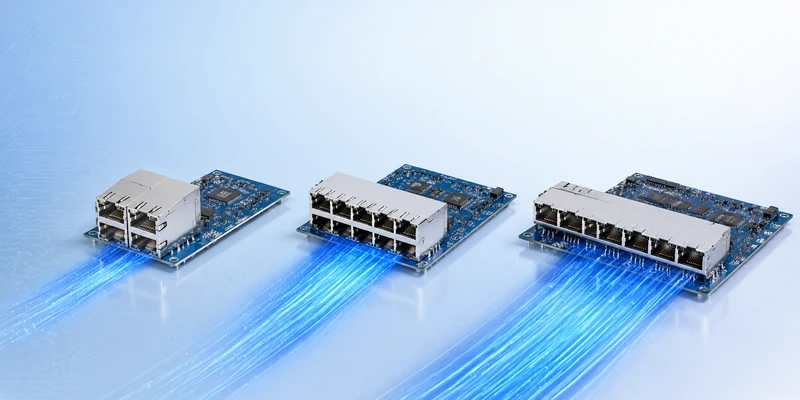
In this guide, we will explain how to choose between Cat5e, Cat6, and Cat6A RJ45 female connectors, when to use shielded or unshielded designs, and how to select the right connector form for your network project.
Key Takeaways
1.An RJ45 female connector is the socket interface used to receive an RJ45 plug and create an Ethernet connection.
2.Cat5e, Cat6, and Cat6A RJ45 female connectors should be selected according to required data rate, cable type, and network environment.
3.Shielded RJ45 female connectors are better for EMI-sensitive applications such as industrial equipment, servers, PoE devices, and data centers.
4.Toolless and punch down RJ45 connectors are mainly used for field cabling, wall outlets, patch panels, and structured cabling systems.
5.Keystone jacks, couplers, and PCB mount RJ45 connectors serve different purposes, so they should not be selected in the same way.
6.For device-side Ethernet interface design, GLGNET offers RJ45 Jacks and Magnetic RJ45 connectors for switches, routers, gateways, servers, security systems, and industrial network devices.
What Is an RJ45 Female Connector?
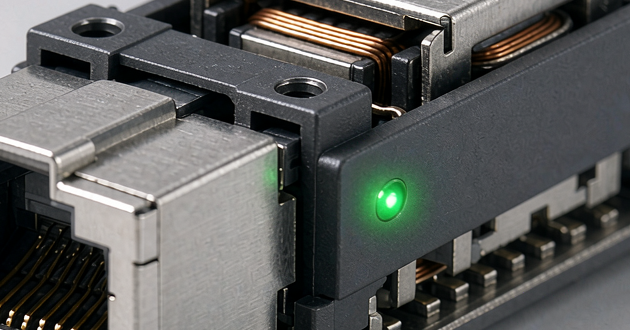
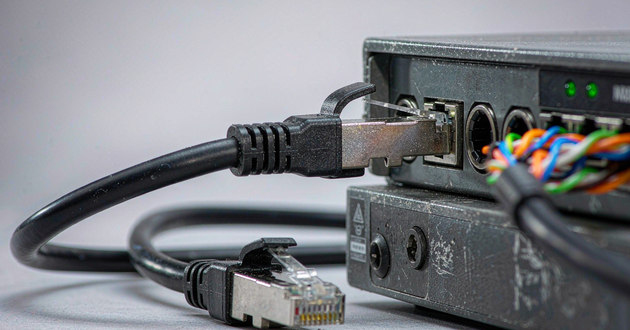
An RJ45 female connector is the socket side of an Ethernet connection. It is also commonly called an RJ45 jack, Ethernet jack, RJ45 socket, or female RJ45 port. Its main function is to receive an RJ45 plug and create a stable physical connection for Ethernet data transmission.
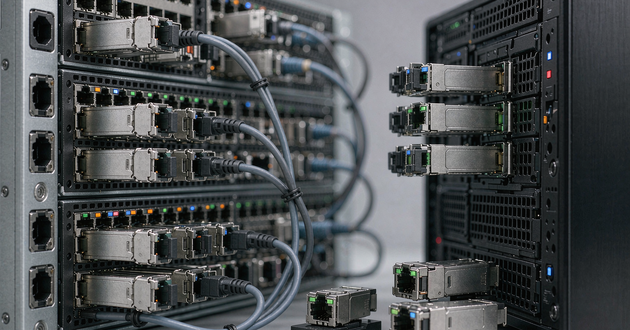
RJ45 female connectors are used in many network applications, including wall outlets, patch panels, keystone modules, Ethernet couplers, routers, switches, servers, industrial gateways, security devices, and PCB-mounted network equipment.
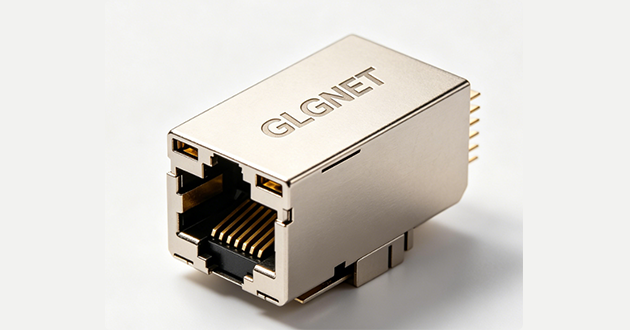
Cat5e, Cat6 or Cat6A: Which RJ45 Female Connector Should You Choose?
Cable category is one of the first things to check when choosing an RJ45 female connector. The connector should match the cable and the required network performance. Using a connector that does not match the cable category may limit speed, increase signal loss, or reduce long-term reliability.
For field cabling, you should also check conductor type, cable outer diameter, wire gauge, and insulation diameter. Solid and stranded conductors may require different connector designs. Cat6A cables are often thicker than Cat5e cables, so the connector structure must be compatible with the actual cable size.
For device-side design, the selection is slightly different. Instead of only thinking about the cable, engineers must also consider PCB layout, magnetics, EMI protection, port density, and equipment speed.
1.Cat5e RJ45 Female Connector
A Cat5e RJ45 female connector is commonly used for basic Ethernet applications. It is suitable for many home networks, office networks, standard routers, entry-level gateways, and common Gigabit Ethernet devices.
Cat5e is usually a practical choice when the network only needs 10/100/1000BASE-T performance and the environment does not have strong electromagnetic interference.
Choose a Cat5e RJ45 female connector when:
The network mainly requires Gigabit Ethernet.
The cable system uses Cat5e cable.
The application is home, office, or standard commercial networking.
The project is cost-sensitive.
The device does not require 10GBASE-T performance.
The EMI environment is relatively clean.
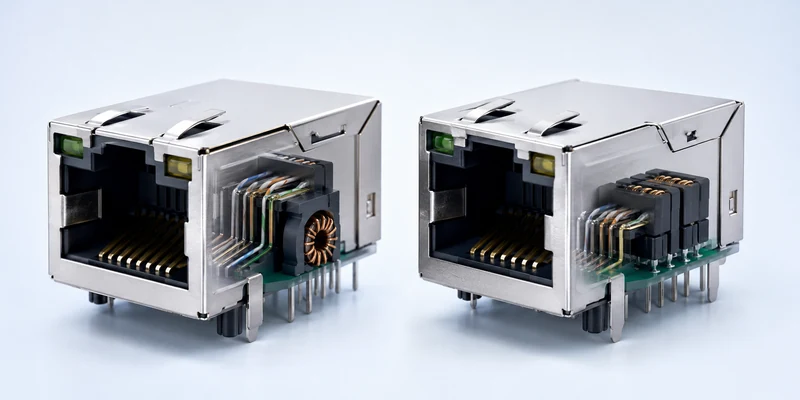
For standard Gigabit Ethernet equipment, GLGNET offers 1G Magnetic RJ45 options such as JLFA1S805-G/YP / 130005-06811. This type of RJ45 with integrated magnetics can be used for device-side Ethernet ports where stable 10/100/1000BASE-T connection and compact PCB integration are required.
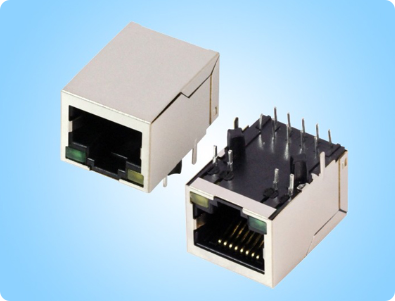
2.Cat6 RJ45 Female Connector
A Cat6 RJ45 female connector is a better choice when the network needs stronger performance margin than Cat5e. It is often used in enterprise networks, commercial buildings, industrial control equipment, and higher-quality network devices.
Cat6 connectors usually provide better support for stable Gigabit Ethernet performance. In some short-distance conditions, Cat6 cabling may also support higher speeds, but the actual performance still depends on the cable, connector quality, installation, and device design.
Choose a Cat6 RJ45 female connector when:
The cabling system uses Cat6 cable.
The network requires more stable Gigabit Ethernet performance.
The project is for enterprise or commercial use.
The environment has moderate EMI concerns.
The device may need better performance headroom for future upgrades.
The network equipment requires higher reliability than basic home devices.
For PCB-mounted Ethernet interfaces, engineers can consider GLGNET RJ45 Jacks or Magnetic RJ45 connectors depending on whether the design uses separate magnetics or integrated magnetics. If PCB space is limited, an RJ45 connector with integrated magnetics can help simplify board layout.
3.Cat6A RJ45 Female Connector
A Cat6A RJ45 female connector is usually selected for high-speed and high-performance network applications. It is commonly used in 10GBASE-T networks, servers, data centers, high-performance switches, PoE devices, and industrial Ethernet systems.
Cat6A is more suitable when the network needs better alien crosstalk control, stronger shielding options, and more stable high-speed transmission. It is often recommended for demanding applications where signal reliability is more important than the lowest component cost.
Choose a Cat6A RJ45 female connector when:
The network requires 10GBASE-T performance.
The device is used in a server, switch, or data center environment.
The project involves PoE or high-power PoE.
The application needs better EMI control.
The product is designed for long-term high-speed network reliability.
The connector must support high-performance cable systems.
For 10G network equipment, GLGNET offers Magnetic RJ45 options such as 130016-00311 and 130020-00711. For high-density Ethernet switch designs, multi-port options such as 130063-01011 and 130064-00111 can be considered according to port density, mounting method, PoE level, and thermal design.
Connector Category | Common Use | Suitable Applications |
Cat5e RJ45 Female Connector | Basic Gigabit Ethernet | Home networks, office devices, standard routers, basic gateways |
Cat6 RJ45 Female Connector | Stable enterprise network performance | Commercial networks, industrial controllers, network devices |
Cat6A RJ45 Female Connector | High-speed and high-reliability Ethernet | 10G switches, servers, PoE devices, data centers, industrial Ethernet |
Shielded vs Unshielded RJ45 Female Connector
Shielding should be selected according to the working environment, cable type, grounding design, and device structure. A shielded RJ45 female connector uses a metal shield to help reduce electromagnetic interference, while an unshielded RJ45 female connector is better suited for cleaner and lower-interference network environments.
Type | Best For | Main Advantage |
Shielded RJ45 female connector | Industrial equipment, servers, PoE devices, data centers, security systems, high-density switches | Better EMI protection and signal stability |
Unshielded RJ45 female connector | Home networks, office devices, basic routers, cost-sensitive products | Simpler structure and lower cost |
For industrial gateways, PoE devices, servers, or equipment installed near motors, power supplies, or control cabinets, a shielded RJ45 jack is usually the safer choice. GLGNET shielded RJ45 Jack options such as 42017-00XXX1 can be used for device-side Ethernet ports that require shielding and LED indication. For designs that need integrated magnetics and EMI support, models such as 130008-02011 or 130017-09211 can be considered.
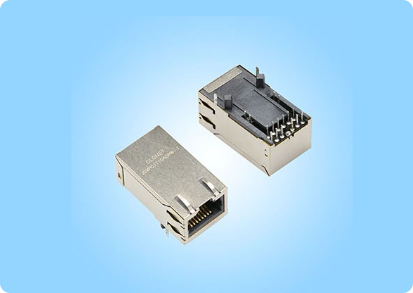
For low-interference environments, an unshielded RJ45 female connector may be enough. GLGNET model 41209-60XXX1 is suitable for applications where a simple and cost-effective RJ45 Jack is required.
In short, shielded does not always mean better for every project. If the cable, grounding, enclosure, and PCB design support shielding, choose a shielded RJ45 female connector. If the application is a clean indoor network with basic speed requirements, an unshielded option can be more practical.
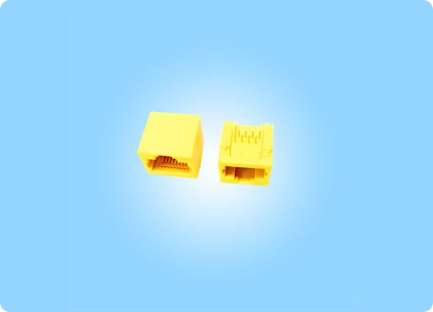
Toolless or Punch Down RJ45 Female Connector?
Toolless and punch down RJ45 female connectors are mainly used in cabling projects, especially for keystone jacks, wall outlets, patch panels, and structured cabling systems. The difference is not about network speed first, but about how the cable is terminated during installation.
A toolless RJ45 female connector is designed for faster field termination. It allows installers to complete wiring without a separate punch-down tool, making it useful for small offices, home networks, retail spaces, and projects where quick installation or later maintenance is important.
A punch down RJ45 female connector uses IDC termination and usually requires a punch-down tool. It is more common in professional cabling systems, commercial buildings, patch panels, and data rooms where stable long-term termination is required.
Type | Installation Method | Suitable Use |
Toolless RJ45 female connector | Cable is locked into the connector without a punch-down tool | Fast installation, wall outlets, keystone modules, small network projects |
Punch down RJ45 female connector | Cable is pressed into IDC contacts with a punch-down tool | Patch panels, structured cabling, commercial buildings, professional installations |
Keystone Jack, Coupler or PCB Mount RJ45 Connector?
RJ45 female connectors can appear in different forms, so the first step is to identify the actual use case. A keystone jack is for fixed cabling points, an RJ45 coupler is for cable-to-cable connection, and a PCB mount RJ45 connector is for Ethernet ports built into network devices.
Connector Type | Main Function | Typical Use |
Keystone Jack | Terminates Ethernet cable at a fixed point | Wall plates, patch panels, structured cabling systems |
RJ45 Coupler | Connects two Ethernet cables together | Cable extension, temporary connection, panel pass-through |
PCB Mount RJ45 Connector | Mounts directly on a circuit board | Switches, routers, servers, gateways, industrial devices |
A keystone jack is usually selected for structured cabling projects, where the connector becomes part of a wall outlet or patch panel. An RJ45 coupler is a simpler option for extending or joining Ethernet cables, but it is not designed for equipment-side port design.
For routers, switches, servers, industrial gateways, PoE devices, and security equipment, a PCB mount RJ45 connector is the more suitable choice. In this case, the connector must match the PCB layout, Ethernet speed, port density, and electrical design of the device.
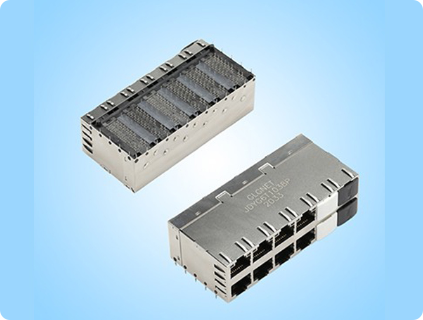
GLGNET RJ45 Female Connector Options
GLGNET provides RJ45 female connector solutions for different network equipment applications.
Application Requirement | Recommended GLGNET Option | Product Example |
Standard Gigabit Ethernet device | 1G Magnetic RJ45 connector | |
Compact vertical PCB design | Vertical RJ45 with integrated magnetics | |
Industrial network device | Magnetic RJ45 with EMI fingers | |
2.5G PoE equipment | 2.5GBASE-T Magnetic RJ45 with PoE support | |
10G network equipment | 10GBASE-T Magnetic RJ45 connector | |
High-density Ethernet switch | Multi-port RJ45 connector | |
Standard device-side RJ45 port | Shielded RJ45 Jack | |
Cost-sensitive Ethernet interface | Unshielded RJ45 Jack |
FAQ About RJ45 Female Connector Selection
1.What is an RJ45 female connector?
An RJ45 female connector is the socket interface used to receive an RJ45 plug and create an Ethernet connection. It is also called an RJ45 jack, Ethernet jack, RJ45 socket, or female RJ45 port. RJ45 female connectors are used in wall outlets, patch panels, couplers, routers, switches, servers, gateways, and PCB-mounted network equipment.
2.Should I choose a Cat5e, Cat6, or Cat6A RJ45 female connector?
Choose a Cat5e RJ45 female connector for basic Gigabit Ethernet, Cat6 for more stable commercial or enterprise network performance, and Cat6A for 10GBASE-T, servers, data centers, PoE devices, and high-performance network equipment. The connector should match the cable category, network speed, and application environment.
3.Is a shielded RJ45 female connector better than an unshielded one?
A shielded RJ45 female connector is better for EMI-sensitive environments such as industrial equipment, servers, PoE devices, high-density switches, and data centers. An unshielded RJ45 female connector is usually enough for clean indoor environments, basic office networks, home networks, and cost-sensitive devices.
4.What is the difference between a toolless and punch down RJ45 female connector?
A toolless RJ45 female connector allows cable termination without a punch-down tool, making installation faster for wall outlets and keystone modules. A punch down RJ45 female connector uses IDC termination and is commonly used in patch panels, structured cabling systems, and professional network installations.
5.What is the difference between a keystone jack, RJ45 coupler, and PCB mount RJ45 connector?
A keystone jack is used to terminate Ethernet cable in wall plates, patch panels, and structured cabling systems. An RJ45 coupler connects two Ethernet cables together. A PCB mount RJ45 connector is installed directly on a circuit board and is used in network equipment such as switches, routers, servers, gateways, PoE devices, and industrial controllers.
Conclusion
A good selection should consider cable category, shielding, termination method, connector form, Ethernet speed, PoE support, EMI requirements, and device layout. This approach helps avoid compatibility problems and supports more reliable network performance.
GLGNET offers a wide range of RJ45 female connector solutions for switches, routers, servers, gateways, industrial devices, security systems, and high-speed network equipment. Whether your project requires a standard RJ45 Jack, a shielded RJ45 female connector, a Magnetic RJ45 connector, a PoE RJ45 connector, or a 10GBASE-T RJ45 solution, GLGNET can help you find a suitable model for your application.
Contact GLGNET to discuss your RJ45 connector requirements and select the right solution for your network equipment design.