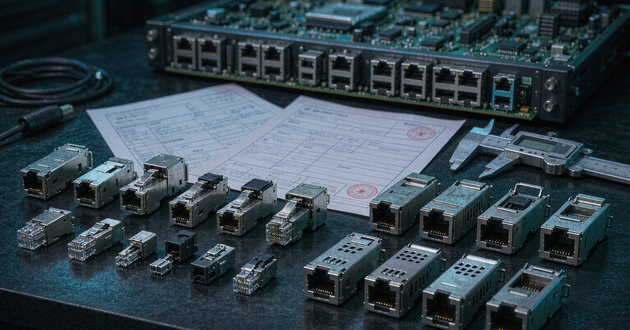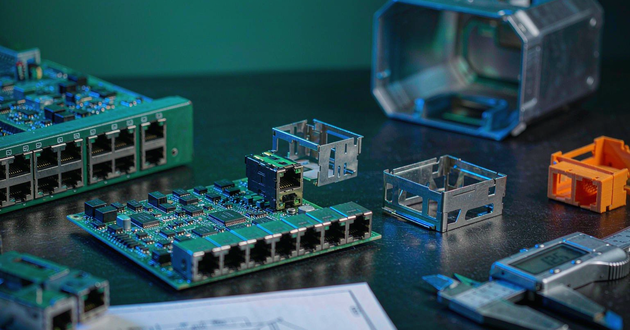
This guide compares both designs from the angles that matter most: front panel visibility, assembly space, application fit, and recommended selection logic. If you are designing switches, routers, gateways, or customized OEM/ODM equipment, this article will help you choose the right GLGNET SFP cage with more confidence.
Table of Contents
What Is an SFP cage with light pipe?
SFP cage with light pipe vs without light pipe: the key differences
Common user pain points in front panel design
When should you choose an SFP light pipe cage?
When is an SFP cage without light pipe the better option?
How to choose the right SFP cage
Why many OEM projects review this choice early
Conclusion
What Is an SFP cage with light pipe?
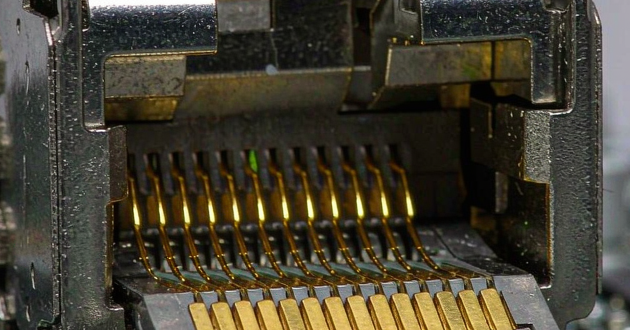
An SFP cage is the metal shielding and retention structure that holds the SFP transceiver at the PCB and front panel interface. It supports mechanical retention, grounding, EMI control, and stable insertion performance. In practical product development, a good GLGNET SFP cage does more than hold a module in place. It also affects panel usability, serviceability, and the overall quality feel of your device.
How the light pipe works
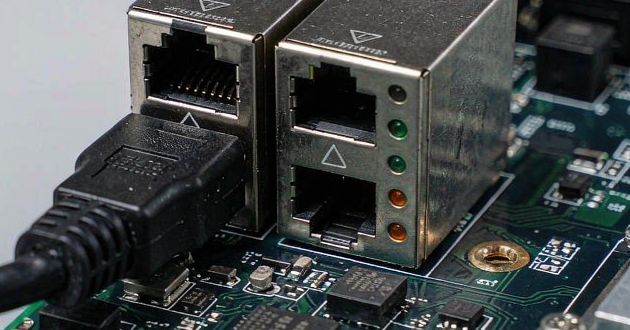
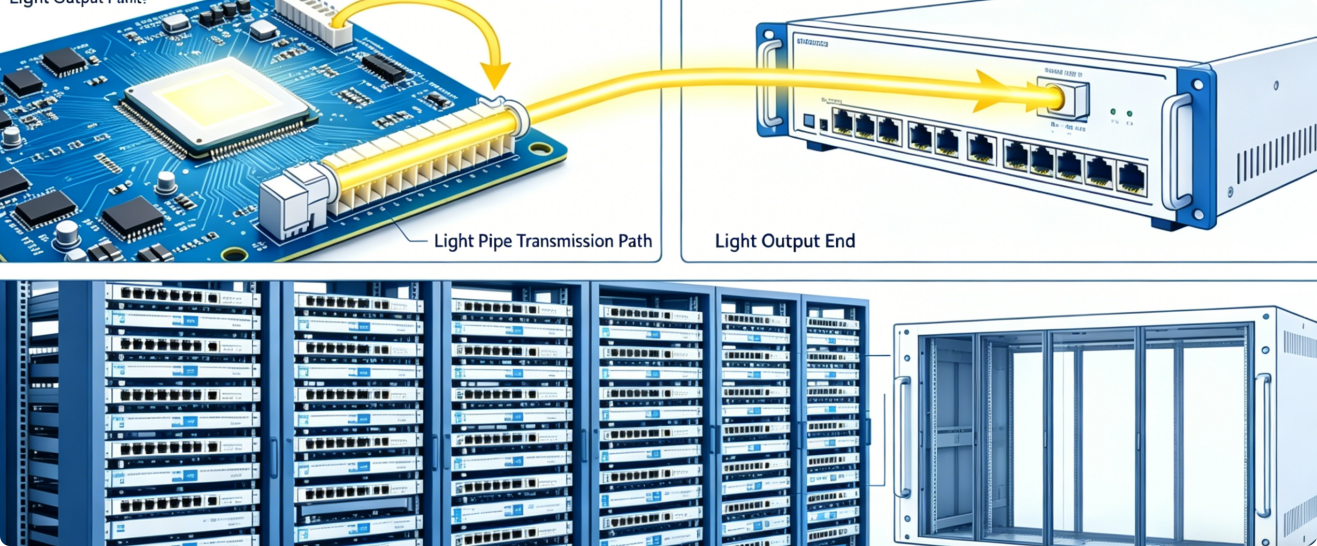
A light pipe transfers LED light from the PCB area to the front of the equipment. In an SFP cage with light pipe, the operator can check link or activity status from the front panel more easily, even if the actual LED sits deeper inside the enclosure.
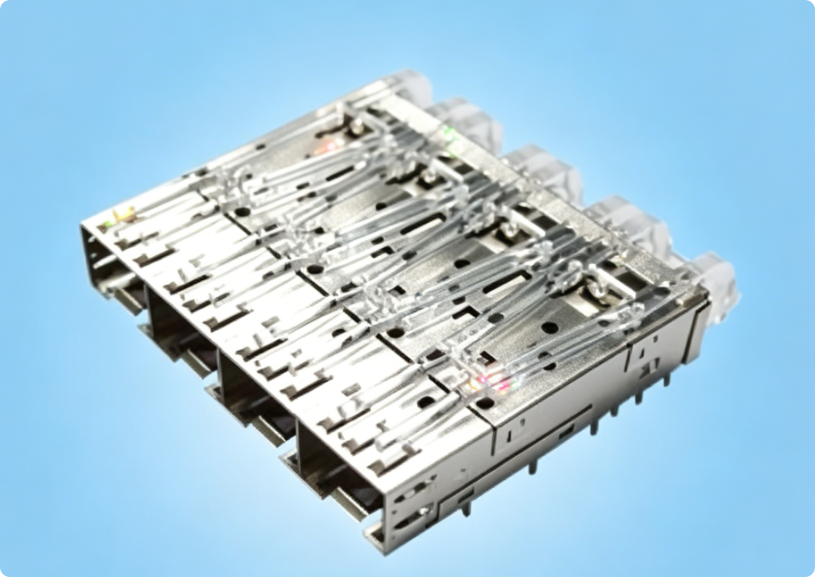
That matters when:
ports are stacked closely together
the bezel is narrow
the equipment is installed in a rack or cabinet
fast visual inspection is important
A well-designed SFP light pipe cage helps you present LED status where users actually look.
What changes with an SFP cage without light pipe
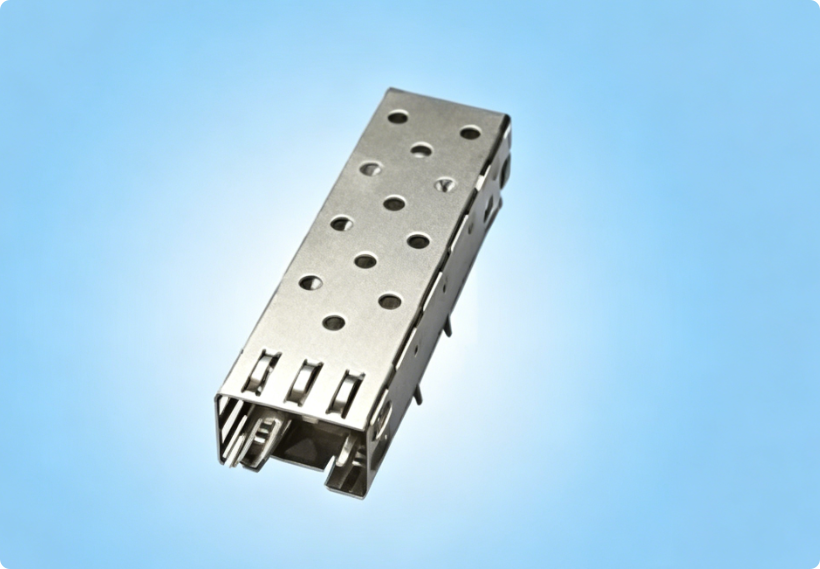
An SFP cage without light pipe removes that optical path. This design is often simpler. It may reduce structure around the port opening and give you more flexibility in tight front-panel layouts. If LED visibility is not critical, that simplicity can be a real advantage.
In other words, the light pipe is not automatically necessary. It is valuable when visibility matters. It becomes less important when space, simplicity, or low-cost integration matter more.
SFP cage with light pipe vs without light pipe: the key differences
Below is the most practical side-by-side comparison for engineers and buyers.
Comparison Area | GLGNET SFP cage with light pipe | GLGNET SFP cage without light pipe |
Front panel visibility | Better LED readability from the user side | Depends on direct LED sightline |
User experience | Faster status check and easier maintenance | Acceptable where visual status is less critical |
Space requirement | Needs room for light path and alignment | Simpler structure for tighter layouts |
Assembly consideration | Requires light pipe positioning control | Fewer alignment concerns |
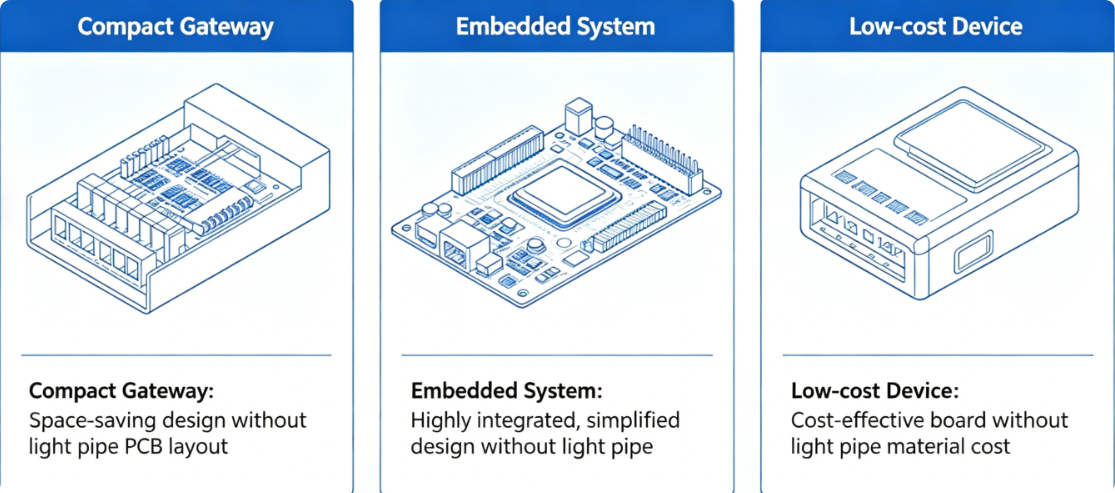
Best fit | Switches, routers, managed systems, visible front panels | Compact devices, embedded systems, cost-focused designs |
Selection logic | Choose when visibility adds value | Choose when simplicity and space matter more |
Need help comparing light pipe and non-light-pipe designs?
Contact GLGNET for a drawing review or sample recommendation.
Contact GLGNET Now
Front panel visibility
This is the most obvious difference. A GLGNET SFP cage with light pipe makes LED indication easier to read from the front. In high-density equipment, even a small visibility improvement can save time during installation and troubleshooting.
For products with multiple ports, users rarely want to lean in and search for tiny board LEDs hidden behind the panel. They expect fast visual confirmation. That is why front-facing LED guidance often matters more than teams expect in the early design stage.
Assembly space and layout freedom
An SFP cage without light pipe often works better when your layout is already crowded. Without the optical path, you have more flexibility around the panel opening, neighboring connectors, and enclosure walls.
This can be especially useful in:
compact gateways
embedded networking systems
customized industrial enclosures
tight multi-port layouts
If every millimeter counts, a no-light-pipe option can make mechanical integration easier.
Application fit and design trade-off
Neither version is universally better. A light pipe SFP cage improves usability and status visibility. A no-light-pipe design simplifies structure and may reduce layout pressure. The right answer depends on how your product is used, not just how it is built.
Common user pain points in front panel design
When teams choose an SFP cage too quickly, the same problems tend to appear later.
“The LED is there, but no one can see it clearly.”
This is common in rack equipment and dense front panels. The LED technically works, but the user experience is poor. The signal is hard to spot, the viewing angle is limited, and field technicians waste time checking status.
A GLGNET SFP cage with light pipe solves this by moving the visual output closer to the user side.

“The panel is too crowded for another structural feature.”
In compact products, designers often want visibility but do not have enough room. Light pipes take space and need alignment. If the bezel area is tight, you may have to prioritize structural simplicity.
That is where an SFP cage without light pipe becomes the more practical choice.
“We discovered the problem too late.”
This is the most expensive pain point. A design may look fine in CAD, but after prototype assembly, the LED cannot be seen well from the front. At that stage, changes to the panel, LED position, or cage selection can delay the project.
That is why reviewing SFP cage with light pipe vs without light pipe early is far cheaper than correcting it after tooling.
When should you choose an SFP light pipe cage?
Data center and managed network equipment
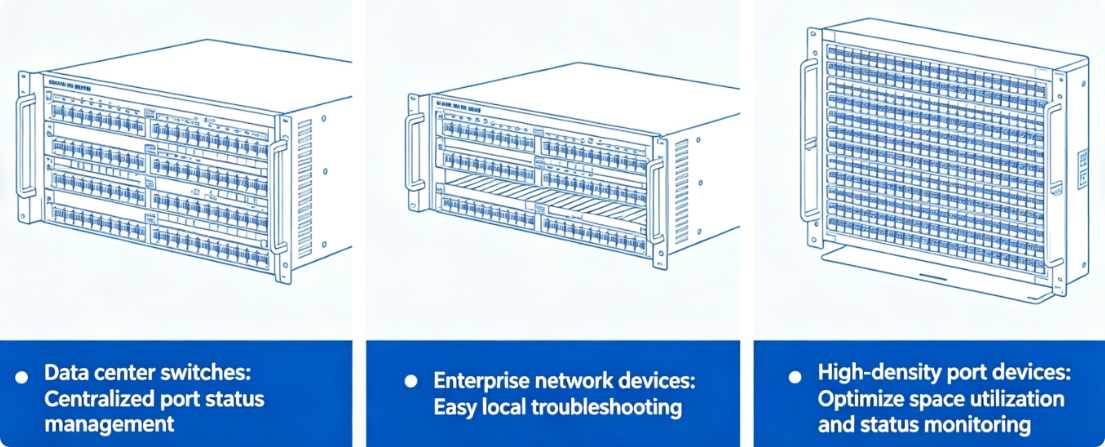
For switches, routers, and managed networking products, front-panel readability is usually important. Users and technicians often need quick visual confirmation of link and activity status. In these cases, a GLGNET SFP light pipe cage usually provides a better front-end experience.
If your equipment is installed in racks, cabinets, or telecom rooms, a light pipe is often worth serious consideration.
User-facing products that need intuitive operation
If your users interact directly with the front panel, status visibility becomes part of product quality. A clean, readable front panel improves confidence and reduces support friction.
This is especially true for:
enterprise networking devices
serviceable telecom equipment
branded OEM products
systems with multiple visible ports
Dense layouts where direct LED viewing is weak
It sounds counterintuitive, but high-density layouts are often where the light pipe becomes more useful. Once ports are closely packed, direct board LEDs can be hard to identify. A GLGNET SFP cage with light pipe helps preserve readability even when the front panel is crowded.
When is an SFP cage without light pipe the better option?
Space-constrained boards and compact enclosures
An SFP cage without light pipe is often the right answer when structure must stay lean. If your PCB edge, front panel, and neighboring parts are already under pressure, removing the light path can simplify the entire mechanical stack.
Internal systems with low visibility requirements
Some devices do not rely on direct front-panel observation. Status may be managed through software, remote control, or internal diagnostics. In those cases, an SFP cage without light pipe can perform well without adding unnecessary structure.
Cost-sensitive designs with simple status logic
Not every product needs premium front-panel usability. If the project is highly cost-sensitive and the status indication is basic, a standard SFP cage without light pipe may be the most efficient choice.
The key is to remove the feature for the right reason, not simply because it seems easier at first glance.
How to choose the right SFP cage
Your Condition | Recommended Choice |
Front LED visibility is important | GLGNET SFP cage with light pipe |
Space is extremely limited | GLGNET SFP cage without light pipe |
Equipment is installed in racks or cabinets | SFP light pipe cage |
Status is managed remotely or internally | SFP cage without light pipe |
Product quality depends on visible status cues | SFP cage with light pipe |
Simplicity and compactness matter most | SFP cage without light pipe |
Share your front panel layout with GLGNET
We’ll recommend the right SFP cage configuration for your project.
Request a Layout Review
Why many OEM projects review this choice early
In OEM and ODM projects, front-panel decisions often affect more than appearance. They influence tooling, PCB layout, LED position, service experience, and product consistency across multiple SKUs.
That is why many engineering teams review the GLGNET SFP cage configuration before tooling is frozen. A quick mechanical drawing review can help you confirm:
whether the LED can be seen clearly
whether the bezel has enough clearance
whether stacked ports still allow proper visibility
whether a standard part is enough or a customized structure is better
When you review that early, you reduce the risk of late design changes. When you delay it, even a small visibility problem can become a much larger manufacturing or user-experience issue.
With GLGNET, you can move from concept evaluation to drawing review, sample confirmation, and scalable manufacturing more smoothly. That helps you keep the front panel practical, not just theoretically correct.
Conclusion
There is no single best answer for every project. The right choice depends on how your users interact with the product, how much space your enclosure can give up, and how important front-facing LED visibility is in real use.
If you are still deciding, the fastest next step is to review your panel layout and request a mechanical drawing. That will tell you quickly whether a standard SFP cage, a GLGNET SFP light pipe cage, or a customized structure is the best fit for your project.
Contact GLGNET today
Get drawings, samples, and custom SFP cage support for your next project.
Get Drawings & Samples
FAQs
1.What is the main advantage of a GLGNET SFP cage with light pipe?
It improves front-panel LED visibility, especially in dense or user-facing equipment.
2.When should you choose an SFP cage without light pipe?
When your layout is tight, front visibility is not critical, or the design needs a simpler structure.
3.Does a light pipe affect mechanical space?
Yes. It usually requires extra space and alignment consideration near the front panel.
4.Can GLGNET support custom SFP cage designs?
Yes. You can request drawing review, samples, and customized structure support based on your application.