In this article, we will explain the compatibility rules between SFP and SFP+ modules, the limitations when mixing them, and the key conditions required for successful deployment.
Can SFP and SFP+ Modules be Used Together?
Yes, but certain compatibility conditions must be met. In most cases, a 1Gbps SFP module can be plugged into a 10Gbps SFP+ port and operate at 1Gbps. However, the reverse is usually not true—SFP+ modules generally cannot function properly in standard SFP ports.
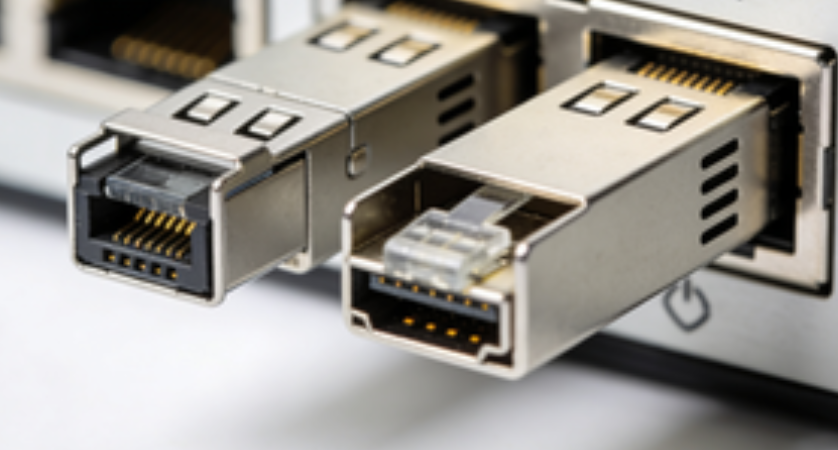
The main reason for this difference lies in their different transmission rate capabilities and electrical designs. Although SFP and SFP+ are essentially identical in form factor and interface structure, the SFP+ interface is designed for 10Gbps high-speed transmission, while SFP modules are primarily used in 1Gbps network environments.
In enterprise network upgrades or data center deployments, if it is necessary to use SFP and SFP+ modules together, understanding their compatibility rules and usage conditions is crucial. This can help avoid problems such as link establishment failures or rate mismatches.
What are SFP Connector and SFP+ Modules?
Before understanding whether they can be used together, we need to understand the basic concepts of SFP and SFP+ optical modules and the differences between them.
An SFP connector is a small, pluggable optical module primarily used for 1Gbps network connections and widely used in switches, routers, and fiber optic network equipment. It can also enable fiber optic communication between devices.
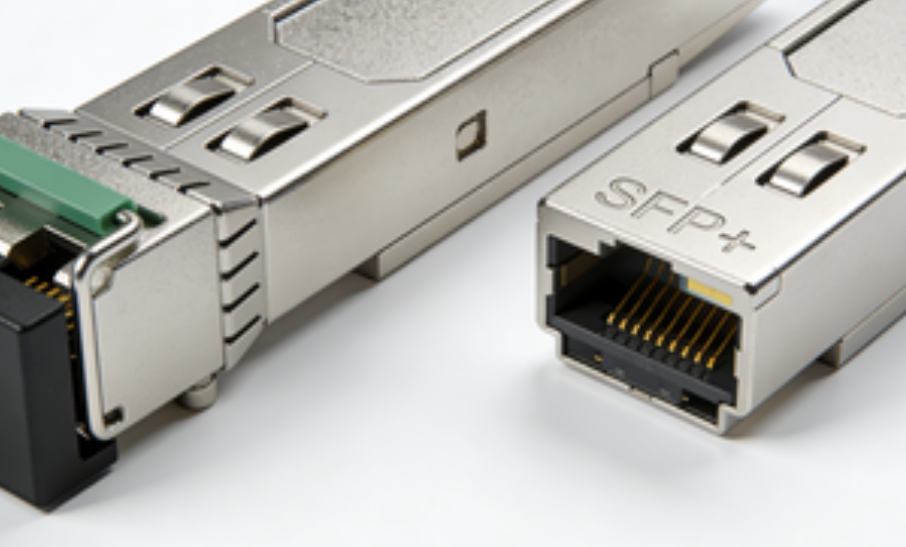
An SFP+ connector is an upgraded version of the SFP. While its form factor and size are basically the same as the SFP, it has optimizations in electrical performance and data rates. It is typically used for 10Gbps high-speed network connections and is frequently seen in data centers, enterprise core networks, and high-speed server interconnect scenarios.
To better understand the differences between the two, please refer to the table below:
Comparison | SFP Module | SFP+ Module |
Full Name | Small Form-factor Pluggable | Enhanced Small Form-factor Pluggable |
Typical Speed | 1 Gbps | 10 Gbps |
Form Factor | Small hot-pluggable module | Nearly identical to SFP |
Electrical Design | Designed for 1G transmission | Optimized for 10G high-speed transmission |
Typical Applications | Gigabit Ethernet, access-layer networks | 10 Gigabit Ethernet, data center networks |
Although SFP and SFP+ modules appear to be the same size and can be plugged into the same type of port, differences in speed and electrical design mean that we still need to pay attention to product compatibility issues during actual use.
SFP and SFP+ Cage Modules Compatibility Rules
1. Backward Compatibility
In most modern network devices, SFP+ ports are typically backward compatible with SFP modules. This is mainly because SFP and SFP+ are essentially the same in physical size and interface structure, allowing SFP modules to be directly inserted into SFP+ ports and establish links. This design primarily facilitates a smooth transition for enterprises during network upgrades. For example, when upgrading a network from 1Gbps to 10Gbps, we can first deploy switches with SFP+ ports, using the existing 1G SFP cage optical modules simultaneously, and then gradually replace them with 10G SFP+ modules as higher bandwidth is required.
In practical applications, many mainstream network equipment vendors (such as Cisco, Hewlett Packard Enterprise, Juniper Networks, etc.) support this backward compatibility mechanism in their switch products. SFP+ ports can run both 10Gbps SFP+ modules and 1Gbps SFP modules. This compatibility is common in enterprise network upgrades, data center expansions, and mixed-rate network environments.
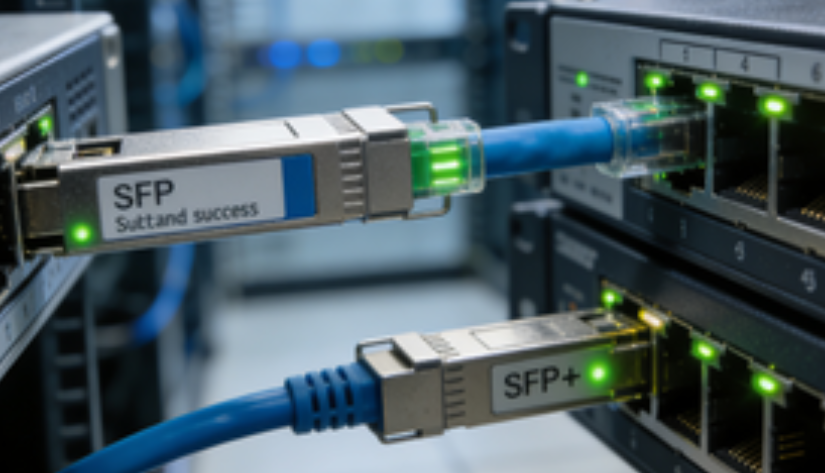
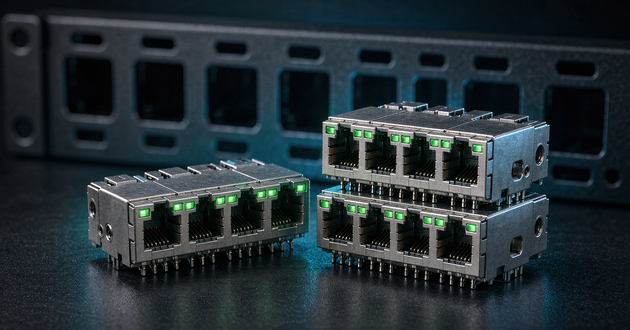
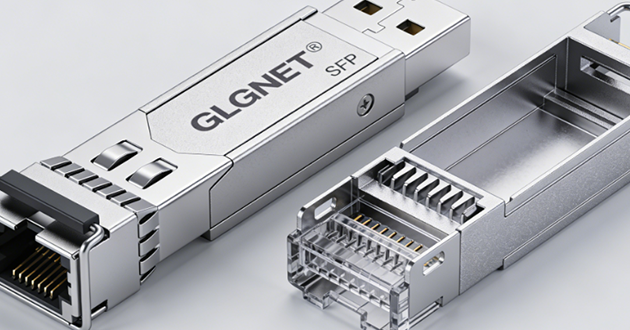
For network hardware manufacturers, ensuring interface compliance with industry standards is equally critical. For example, GLGNET's SFP/SFP+ connectors and cage products are designed according to the SFF (Small Form Factor) industry specification and MSA standard, maintaining good mechanical and electrical compatibility with mainstream SFP/SFP+ optical modules, thus helping equipment manufacturers achieve stable module insertion/removal and connection performance.
2. Rate Limitation
Although SFP modules can be inserted into SFP+ ports, the link rate does not automatically increase to 10Gbps. Instead, it is negotiated and reduced to 1Gbps based on the module's capabilities. This is because the hardware design and transmission protocol of SFP modules only support a 1Gbps data rate; therefore, the maximum bandwidth of the entire link will be determined by the device with the lowest speed.
For example, if a switch's SFP+ port is connected to a 1G SFP LX optical module, and the other end device is also a 1G SFP module, the final link rate established between the two devices will still be 1Gbps. Even if the switch port itself supports 10Gbps, it cannot overcome the module's rate limitation. This rate negotiation mechanism is very common in Ethernet standards and is used to ensure stable communication between different devices.
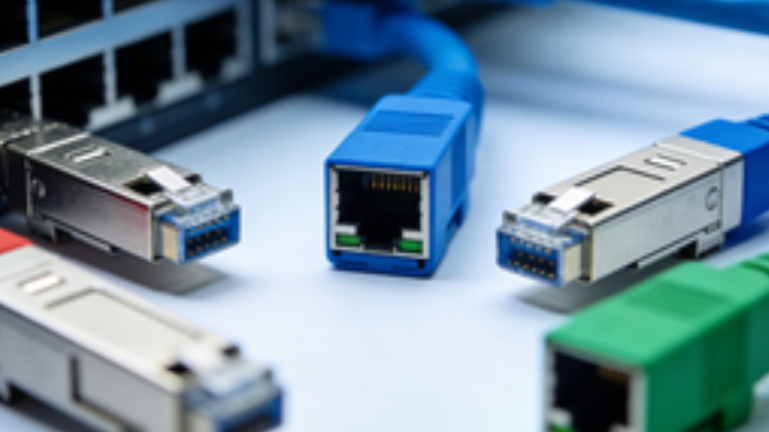
From a practical network deployment perspective, this rate limitation is also often used in some hierarchical network structures. For example, in data centers or enterprise networks, the core layer may use 10Gbps or higher, while the access layer still uses 1Gbps. By using SFP modules in SFP+ ports, the system can automatically negotiate to 1Gbps, thereby enabling interconnection between networks with different rates.
3. Port Capability Limitations
It is important to note that not all SFP+ ports support 1Gbps operation. While most enterprise-grade switches offer this compatibility, some devices may only support a fixed 10Gbps rate and cannot recognize or operate 1G SFP modules. This situation usually depends on the following factors:
Switch Vendor Design
Different vendors have different port rate support strategies. Some devices support multi-rate ports (1G/10G), while others' SFP+ ports only support 10G speeds.
Device Model and Hardware Architecture
Some high-performance data center switches have ports designed for 10Gbps or higher speeds, and their hardware architecture may not include 1G PHY support, thus preventing the operation of 1G modules.
System Configuration or Firmware Limitations
Some devices require manual configuration of port speeds within the system; otherwise, the ports default to 10G mode.
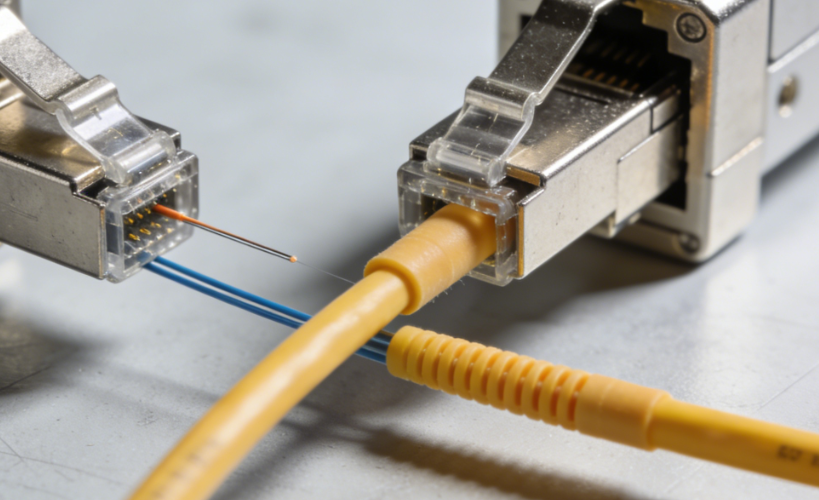
For example, in some data center switches, SFP+ ports default to 10Gbps mode. If a 1G SFP module is inserted, the port may not be recognized or the link may fail to establish. Manual configuration is required to switch to the new speed mode. In most enterprise-grade access switches (such as models supporting multi-rate ports), SFP+ ports can automatically recognize 1G modules and establish 1Gbps links. Ultimately, the need for manual configuration depends on the specific device.
Before deploying or purchasing optical modules, it is recommended to consult the switch's datasheet or compatibility list to confirm whether the SFP+ port supports 1Gbps mode. Furthermore, selecting high-quality SFP cages and connectors that conform to the SFP standard during the hardware design phase can help enterprises improve overall compatibility and network stability in applications such as network centers.
Conditions for Mixed Use of SFP and SFP+ Connector Modules
In actual network deployments, although SFP modules can be used in some SFP+ ports, certain basic conditions must be met to ensure the link can be established and operate stably. The following key factors directly affect the connection performance when SFP and SFP+ are used together.
1. Fiber Optic Type Must Be Consistent
When using optical modules for connection, the fiber optic types used at both ends must be consistent. Common fiber optic types mainly include single-mode fiber (SMF) and multi-mode fiber (MMF).
Single-mode fiber is typically used for long-distance transmission, such as network connections of 10km, 20km, or even longer; while multi-mode fiber is more suitable for short-distance communication, such as high-speed interconnection between data center racks. If one end uses a single-mode module and the other end uses a multi-mode module, even if the interfaces can be connected, the link will likely not function properly. Therefore, when deploying SFP and SFP+ modules, ensure that both ends use the same type of fiber optic cable and the corresponding optical module.
2. Wavelength Matching Required
Besides fiber type, the operating wavelengths of the optical modules at both ends must also be consistent. For example, common single-mode modules may use 1310nm or 1550nm wavelengths, while multimode modules typically use 850nm. If the wavelengths of the modules at both ends are different, even if the physical connection is correct, the optical signal cannot be correctly recognized by the peer device, resulting in link failure. When selecting and deploying optical modules, ensure that the wavelength specifications of the modules at both ends are consistent.
3. Rate Compatibility Required
In SFP and SFP+ mixed scenarios, the link rate is usually determined by the lowest-speed device or module. For example, when a 1G SFP module is connected to an SFP+ port, the port needs to support 1Gbps rate negotiation; otherwise, the link may not be established. Some switch SFP+ ports only support 10Gbps mode, so in this case, inserting a 1G SFP module may not work properly.
Before actual deployment, it is recommended to confirm whether the switch port supports multi-rate mode (1G/10G) and ensure that the two devices at both ends can successfully negotiate a 1Gbps rate to ensure the stability of the network connection.
Conclusion
If you are looking for reliable SFP connector and cage solutions, GLGNET provides industry-standard SFP/SFP+ connector components designed for excellent compatibility with mainstream optical modules and networking equipment.
Explore GLGNET’s SFP connector solutions to support stable, high-performance fiber connectivity in your networking hardware designs.
Read more:
https://www.glgnet.biz/articledetail/how-to-choose-the-right-sfp-cage-for-our-setup.html
https://www.glgnet.biz/articledetail/sfp-cage-with-emi-gasket-when-do-you-really-need-it.html