In this guide, I will compare both options from a practical point of view. Instead of only listing pros and cons, I will help you understand which RJ45 connector is better for beginners, which one makes more sense for experienced installers, and how to choose the right connector for Cat6, PoE, and everyday Ethernet cable jobs.
Table of Contents
What is a pass through RJ45 connector?
Pass through vs. non pass-through RJ45 connector: what is the real difference?
Why many users prefer RJ45 pass through connectors
Why some projects still need a standard RJ45 connector
Which RJ45 connector is better for Cat6, PoE, and field installation?
How to choose the right RJ45 connector for your job
What is a pass through RJ45 connector?
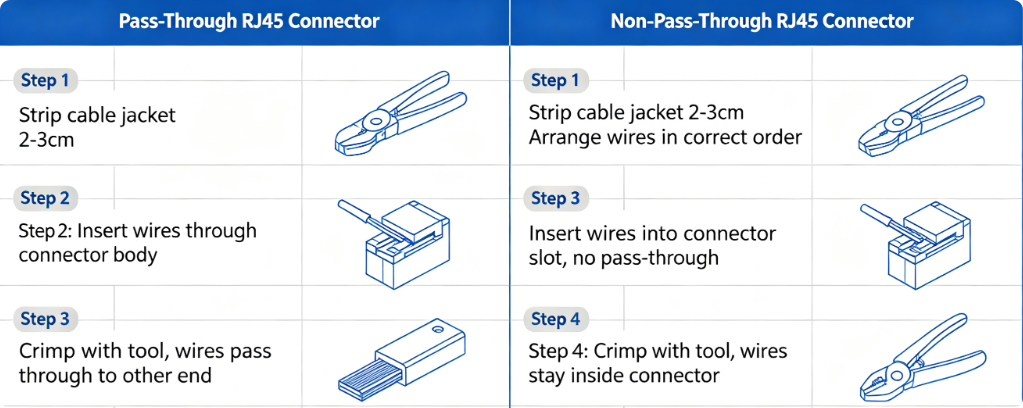
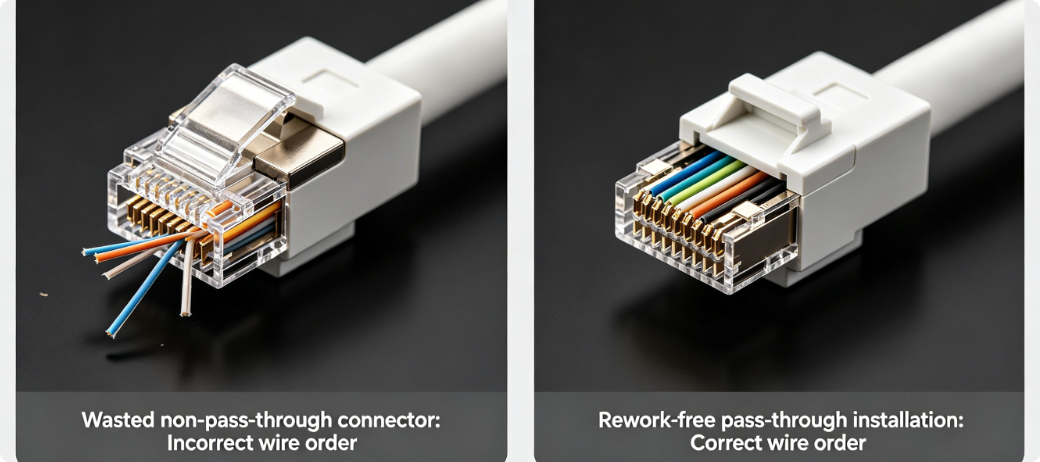
A pass through RJ45 connector allows the conductors to extend out of the front of the plug before crimping, making it easier to check the wire order and see whether each wire is fully inserted. By comparison, a non pass-through RJ45 connector follows a more traditional method: the wires are trimmed to length first, then inserted into the plug and crimped, with less visible confirmation during the process.
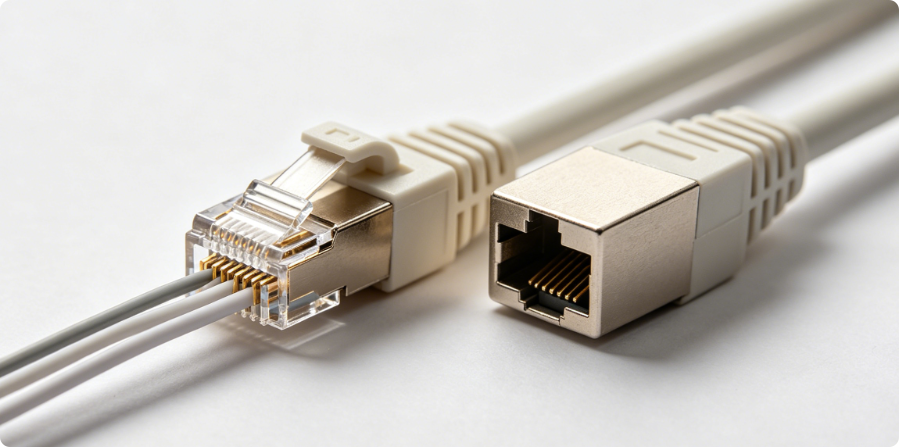
This structural difference has a direct impact on installation. A pass through RJ45 connector is often preferred for its easier wire verification, while a standard RJ45 connector is commonly used in more familiar, routine assembly work. It may look like a small design change, but in practice it can noticeably affect how simple and efficient the termination process feels.
Pass through vs. non pass-through RJ45 connector: what is the real difference?
The most useful way to compare these two connector types is not by marketing language, but by installation behavior.
Comparison Point | RJ45 pass through connector | Non pass-through RJ45 connector |
Wire visibility | High | Lower |
Ease for beginners | Easier | More technique-dependent |
Pre-crimp confidence | Stronger | Depends on experience |
Workflow style | Verify first, trim later | Cut first, insert carefully |
Common appeal | DIY, field work, low-volume jobs | Routine installation, trained workflows |
Selection logic | Easier to get right visually | Better when process control is already strong |
1.Installation difficulty
If you are new to cable termination, RJ45 pass through connectors usually feel easier because they reduce one major source of stress: uncertainty. You can see whether the wires are in the right order and whether they actually reached the front.
A non pass-through RJ45 connector is less forgiving in that sense. You need to prepare the conductors carefully before insertion, and small mistakes are easier to miss until after crimping.
2.Error prevention
This is where pass-through designs stand out most. For many users, the main problem is not crimping pressure itself. It is keeping the conductors aligned while inserting them. A pass through RJ45 connector helps reduce that failure point.
By contrast, a standard RJ45 connector relies more heavily on operator consistency. That is not necessarily a disadvantage if the installer is experienced, but it can create a steeper learning curve for less experienced users.
Why many users prefer RJ45 pass through connectors
There is a reason pass-through plugs are popular: they solve a very common human problem, not just a technical one.
1.They make the process easier to verify
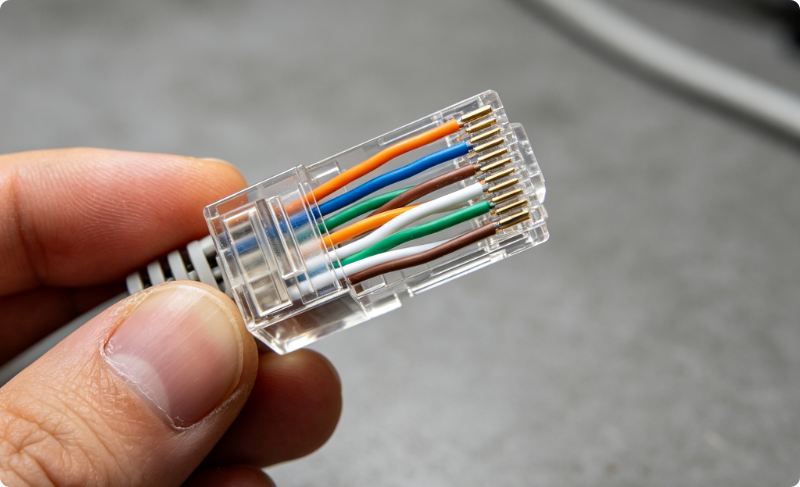
When you can see the wires extend through the front, you feel more certain that the connector is assembled correctly. That visual confirmation matters a lot, especially if you are making only a few cables and do not terminate Ethernet connectors every day.
2.They reduce rework
If your wire order is wrong in a closed plug, you often discover it too late. With a pass through RJ45 connector, you can catch the problem before finishing the crimp. That can save time, reduce wasted connectors, and make the installation less frustrating.
3.They are friendlier for low-volume jobs
If you are doing a home network setup, a small office cable run, or a few field replacements, simplicity matters. In those situations, RJ45 pass through connectors are often the more comfortable choice because they shorten the learning curve.
Need an easier connector style for faster and more confident cable assembly?
Explore RJ45 pass through connector options from GLGNET.
Explore GLGNET RJ45 Options
Why some projects still need a standard RJ45 connector
Even though pass-through designs are convenient, they are not automatically the best choice for every application.
1.A standard workflow still matters
If you already have a trained installation team, a tested crimping routine, and a plug style your technicians know well, switching to pass-through may not bring much value. In some environments, consistency matters more than convenience.
A standard RJ45 connector fits that kind of workflow well. It may take a little more care during preparation, but it works well when the installer already has the process under control.
2.Some users prefer a more traditional finished style
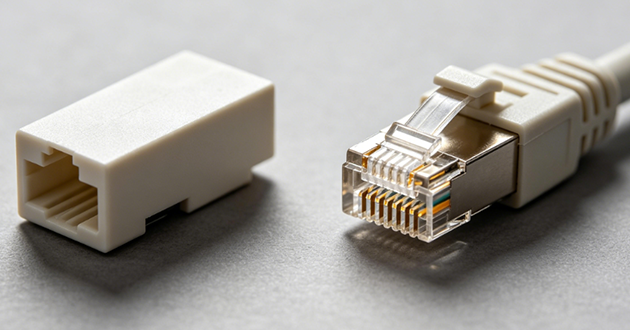
A non pass-through RJ45 connector gives a more conventional closed-end appearance. For some installers, that feels cleaner and more familiar. This preference is not only about aesthetics; it is also about habit, comfort, and process discipline.
3.Better does not always mean easier
This is an important point. Sometimes people ask which connector is “better” when what they really mean is “which connector is easier.” Those are not always the same thing.
A pass through RJ45 connector may be easier for first-time users. A standard RJ45 connector may still be the better fit for teams that care more about repeatable process control than visual convenience.
Which RJ45 connector is better for Cat6, PoE, and field installation?
This is where the choice becomes more application-driven. Instead of asking which connector is better in general, it is more useful to ask which one fits your cable type, installation environment, and working method more effectively.
1.For Cat6 patch cable work
For standard Cat6 patch cable termination, a truecable cat6/6a RJ45 pass through connectors is often a practical option. It helps simplify the assembly process and can make termination more efficient, especially when ease of handling is a priority.
2.For PoE applications
In PoE installations, consistency matters more than convenience alone. The key is to achieve a secure and accurate termination with good cable-to-connector compatibility. In this case, the better RJ45 connector is the one you can assemble correctly and reliably every time.
3.For field installation
In field environments, speed and simplicity often matter more. If you are working on-site, under time pressure, or without an ideal setup, RJ45 pass through connectors can make the process more manageable and help reduce rework.
4.For trained installers or repeatable shop processes
For experienced technicians working in a controlled setting, a non pass-through RJ45 connector can still be a strong choice. When the process is already standardized, a traditional closed-end plug may fit the workflow just as well, or even better.
Use Case | Better Starting Choice |
First-time cable assembly | RJ45 pass through connector |
Small home or office jobs | Pass through RJ45 connector |
Fast field replacement | RJ45 pass through connectors |
Trained installer workflow | Standard RJ45 connector |
Stable routine production process | Non pass-through RJ45 connector |
PoE or critical installation | Choose the style you can terminate most reliably |
Working on Cat6, PoE, or field installation?
Contact GLGNET to compare the right RJ45 connector style for your project.
Contact GLGNET Now
How to choose the right RJ45 connector for your job
If you want the simplest decision method, do not start by asking which connector is best in theory. Start by asking what problem you are trying to avoid.
1.Choose a pass through RJ45 connector if:
you want easier wire-order verification
you are new to Ethernet cable termination
you want to reduce mistakes and rework
you are doing low-volume or field-based installation
2.Choose a non pass-through RJ45 connector if:
you already follow a stable crimping workflow
your team is experienced with closed-end plugs
you value routine consistency over visual confirmation
you want a more traditional termination method
Conclusion
In the end, the better connector is the one that helps you complete the job more accurately and consistently. Instead of asking which style is better in theory, it is more practical to choose the option that fits your actual application. If you are comparing RJ45 pass through connectors and standard plugs for your next project, GLGNET can help you find the right solution for easier, more reliable Ethernet termination.