If you are standing in front of an Ethernet cable and asking, “Can I wire an RJ45 connector without a crimper?”, you are probably dealing with one of three situations: you need a fast fix, you do not have the right tool, or you are trying to avoid buying a crimping tool for a small job.
The short answer is yes, in some cases, but not in the way many people expect. A standard RJ45 plug is designed for crimping. Without the right pressure and contact, the connection may look finished but still fail in real use. That means unstable signal, poor contact, slower speed, or a cable that stops working after a short time.
In this guide, I will walk you through what you can do, what you should avoid, and when a tool-free RJ45 connector or another alternative makes more sense. If you want a quick answer plus a reliable path forward, this article will help you choose the right option.
Table of Contents
Can you really wire an RJ45 connector without a crimper?
Why standard RJ45 plugs usually need crimping
What options do you have if you do not have a crimper?
RJ45 without crimper: what works and what does not
When a tool-free RJ45 connector is the better choice
How to choose the right solution for your Ethernet cable
Final answer: should you wire an RJ45 without a crimper?
Can you really wire an RJ45 connector without a crimper?
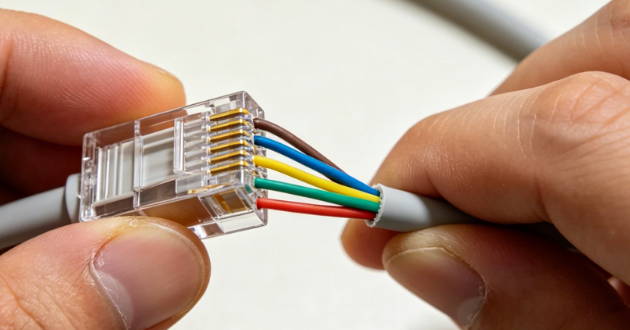
Yes, but only in limited situations. A standard RJ45 connector is designed to be crimped so the contacts can press firmly into the conductors and the plug can grip the cable securely. If you try to wire an RJ45 connector without a crimping tool, the wires may appear to be in place, but the connection is often unstable or incomplete.
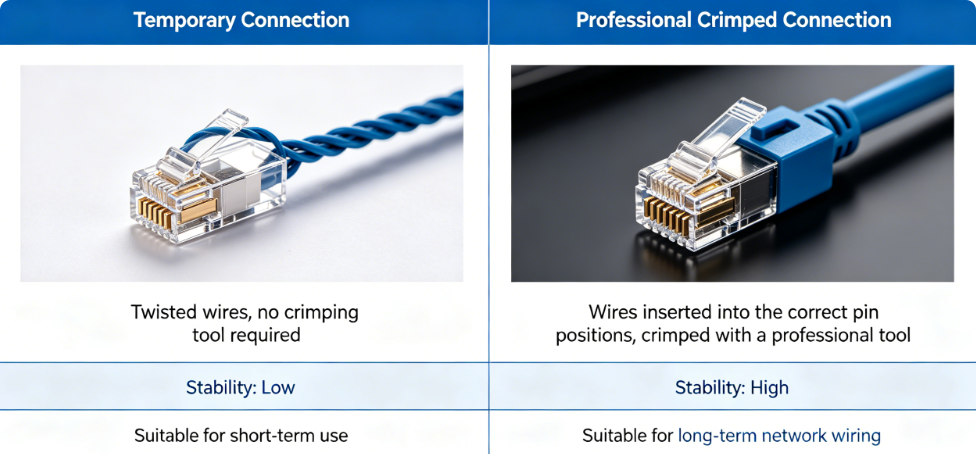
In other words, you may be able to make a temporary connection without a crimper, but it is usually not a reliable long-term solution. If you want stable performance, it is better to use the proper tool or choose a tool-free RJ45 connector instead.
Why standard RJ45 plugs usually need crimping
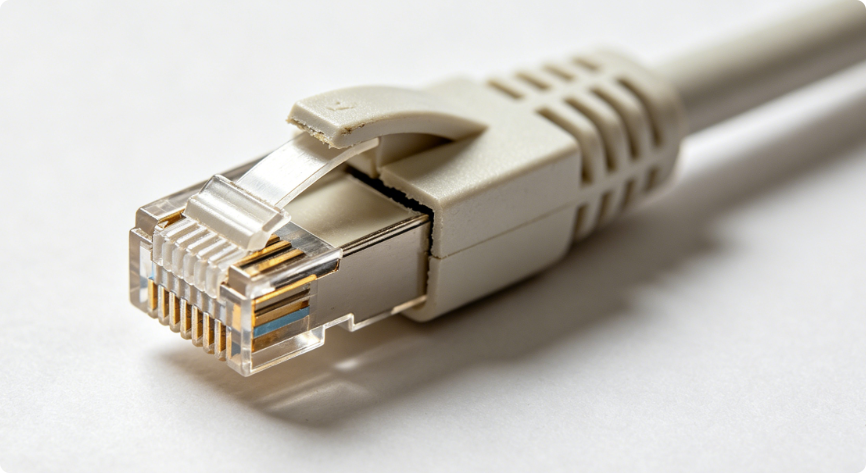
A standard RJ45 plug is built to work with pressure. The contacts inside the plug are designed to pierce or press into the conductors when you use an RJ45 crimping tool. At the same time, the plug body grips the cable jacket to improve strain relief.
Without that process, you face several risks.
1.Poor conductor contact
If the metal pins do not seat properly, the signal path may be weak or broken. The cable may fail immediately, or it may work only when held at a certain angle.
2.Weak mechanical retention
Even if the wires seem correctly inserted, the connector may not hold the cable jacket securely. That makes the termination easy to pull loose.
3.Unstable speed and performance
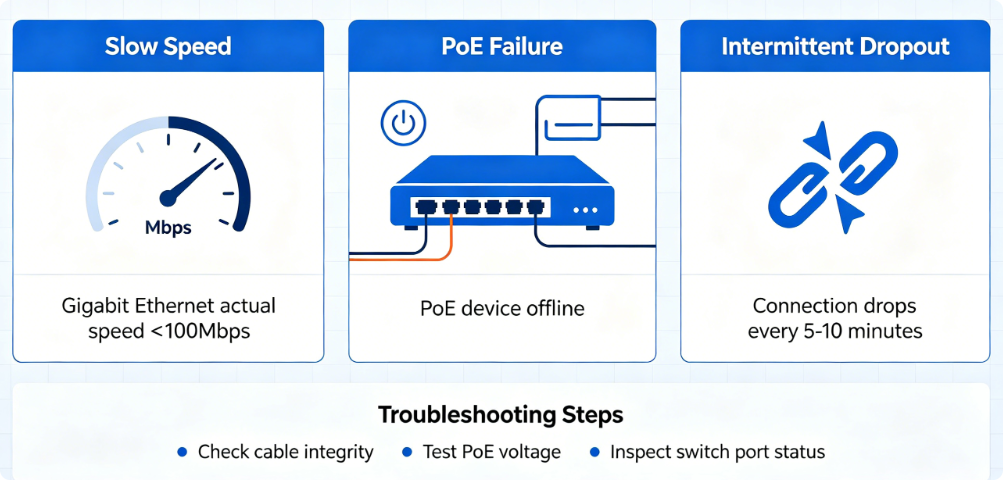
A badly terminated RJ45 connector can cause:
slow network speed
intermittent dropouts
failed PoE delivery
inconsistent link detection
This is especially important if you are working with gigabit Ethernet, PoE devices, or any application that needs stable performance over time.
4.Line order mistakes
Many non-professional users struggle more with wire order than with the connector itself. If you mix up T568A and T568B, the cable may not work even if the conductors are physically seated. That is one reason why “doing it by hand” often turns into a troubleshooting problem.
What options do you have if you do not have a crimper?
If you do not have a crimper, you still have a few options. Some are temporary, and some are much more reliable.
Option | Can it work? | Reliability | Best use case |
Standard RJ45 connector without crimping | Sometimes | Low | Emergency only |
Borrow or use an RJ45 crimping tool | Yes | High | Best for standard plugs |
Use a tool-free RJ45 connector | Yes | Medium to high | Small jobs, field work |
Use a keystone jack and patch cord | Yes | High | Structured cabling |
Buy a pre-terminated cable | Yes | High | Fast and simple replacement |
1.Temporary manual insertion
This is what many people imagine first. You trim the wires, arrange them, insert them into the plug, and hope the connector holds well enough. This may occasionally produce a short-lived result, but it is not a professional or dependable method.
2.Borrowing the proper tool
If you are using a standard modular plug, this is still the safest option. One proper crimp can save you from repeated testing, rework, and signal problems.
3.Switching to a tool-free RJ45 connector
This is where the topic becomes much more useful. If you do not want to use a crimper, you should not force a crimp-style connector into a tool-free job. Instead, use a connector designed for no-crimp or low-tool termination.
RJ45 without crimper: what works and what does not
Let me make this part very clear.
1.What works
These options can work well if chosen correctly:
tool-free RJ45 connector
keystone jack plus patch cable
pre-terminated Ethernet cable
proper crimping with the right tool
2.What does not work well
These options are risky or poor long-term choices:
forcing a standard RJ45 plug without crimper
using makeshift tools to press contacts unevenly
ignoring wire order and hoping the cable links
using a weak termination for PoE or high-speed Ethernet
3.Quick comparison chart
Situation | Recommended approach |
You need a one-time emergency fix | Temporary manual method only if nothing else is available |
You want a reliable cable for daily use | Use a crimper or buy a pre-terminated cable |
You want easy field termination | Use a tool-free RJ45 connector |
You are wiring a network install | Use the correct structured cabling method |
You are not confident with pin order | Use a keystone jack or pre-made cable |
When a tool-free RJ45 connector is the better choice
If your goal is to avoid a crimper but still get a usable result, a tool-free RJ45 connector is often the smartest compromise.
1.Why this option solves the real pain point
Most users asking about RJ45 without crimper are not looking for a bad workaround. They are looking for a practical solution that does not require a full tool setup. A connector designed for tool-free or simplified termination solves that problem much better than trying to hand-build a standard crimp plug.
2.Who this option fits best
A tool-free RJ45 connector may fit you well if:
you are doing light DIY work
you need quick field replacement
you are handling a low volume of cables
you want easier assembly than standard crimping
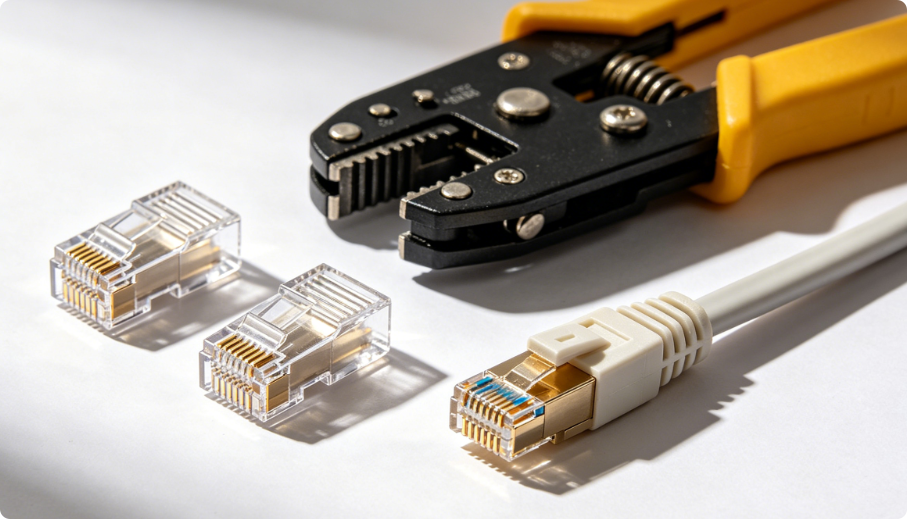
3.When you should still use a crimped connection
You should still use a proper crimped RJ45 connector when:
long-term stability matters most
you are deploying many cables
your network carries PoE
you need consistent quality across installations
If your project involves OEM equipment, structured cabling, or repeatable production requirements, choosing the right connector style upfront matters much more than finding a temporary shortcut.
How to choose the right solution for your Ethernet cable
The best answer depends on what you are trying to do.
Your need | Best choice |
Quick temporary fix | Manual method only as a last resort |
Reliable home or office cable | Proper crimping or pre-made cable |
Easy installation without special tools | Tool-free RJ45 connector |
Clean structured installation | Keystone jack + patch lead |
Repeated professional work | Standard RJ45 crimping tool setup |
Final answer: should you wire an RJ45 without a crimper?
Yes, you can try it, but that does not mean you should rely on it.
If you are working with a standard RJ45 connector, crimping is still the proper method. Without it, contact quality, cable retention, and long-term performance are all weaker. That is why a hand-wired standard plug is best treated as a last-resort or emergency measure, not a normal installation method.
If your real goal is to avoid crimping, the better question is not “Can I force a standard connector to work?” The better question is, “What is the right no-crimp solution for my cable?”
Need an easier Ethernet termination option? Explore practical RJ45 connector solutions from GLGNET and choose the method that fits your installation best.