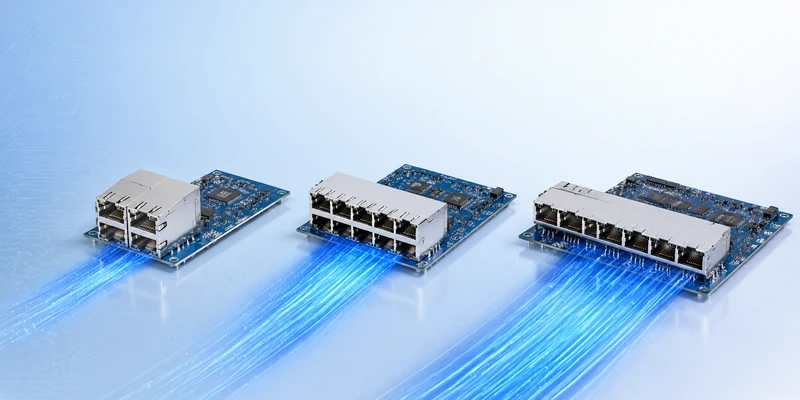
In this blog, we’ll look at what actually changes between these modules—from data rate and lanes, to form factor and port density, to optics, cables and compatibility.The goal is not just to list specs, but to help you decide which option makes the most sense for your next refresh or new build.
Data Rate and Lanes: SFP vs SFP+ vs SFP28 vs QSFP28 and the Journey from 1G to 100G
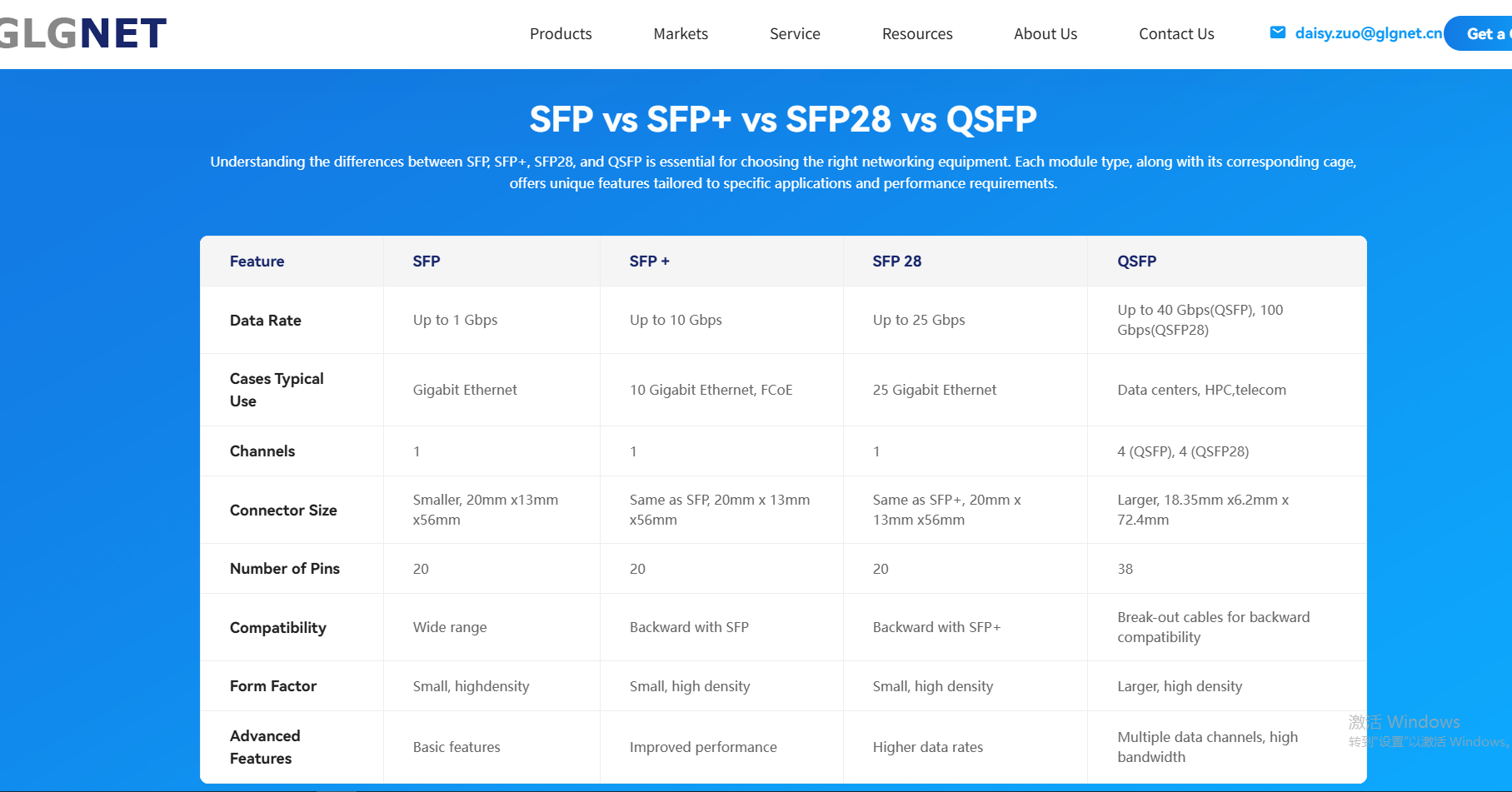
The biggest differentiator among these transceivers is the combination of data rate and electrical/optical lanes used to achieve it.
|
Form Factor |
Line Rate |
Number of Lanes |
How Speed Is Achieved |
|
SFP |
1 Gbps |
1 lane |
Single 1G SERDES |
|
SFP+ |
10 Gbps |
1 lane |
10G SERDES, improved encoding |
|
SFP28 |
25 Gbps |
1 lane |
25G SERDES with lower noise + FEC |
|
QSFP28 |
100 Gbps |
4 lanes × 25G |
Parallel optics or breakout to 4×25G |
In the SFP family (SFP / SFP+ / SFP28), bandwidth simply increases on a single lane—from 1G to 10G to 25G—while the overall form factor stays the same. QSFP28 builds on this by combining four 25G lanes to deliver 100G through one port. The shift from 10G to 25G per lane was especially important for data centers, because it made it possible to boost total network capacity by four times without adding more ports or expanding the switch footprint.
Form Factor and Density: Why SFP, SFP+, SFP28 and QSFP28 Matter
Physical size plays a crucial role in high-density switch designs, and this is exactly where QSFP28 stands out—delivering significantly more bandwidth per port while keeping the overall footprint compact.
|
Form Factor |
Size |
Typical Port Density (1U switch) |
|
SFP / SFP+ / SFP28 |
Small |
Up to 48 ports |
|
QSFP28 |
Larger |
32 × 100G ports (or breakouts for 128 lanes of 25G) |
What really changes at this stage is how much bandwidth each port can carry and how efficiently you can use that bandwidth. SFP, SFP+, and SFP28 all share the same compact form factor, so moving from 1G to 10G to 25G is often as simple as swapping the transceiver and confirming the switch can support the higher speed. Your chassis, front-panel layout, and cabling strategy can stay largely the same, which keeps upgrades relatively low-risk and easy to roll out.
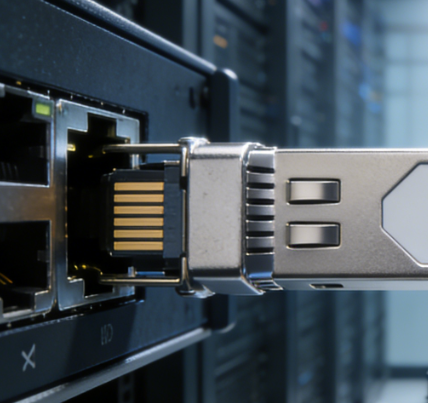
QSFP28, by contrast, is designed to pack much more capacity into a single front-panel port. One QSFP28 interface delivers 100G on its own, and in many designs it can be broken out into four separate 25G links—essentially turning one physical port into four logical connections. In large data center environments, this has a compounding effect: you can hit your total bandwidth targets with fewer switches, fewer cables, and fewer patch points; you also trim overall power usage from optics and switching chips, and free up rack space that would otherwise be consumed by extra network hardware. The end result is a denser, cleaner, and more scalable network fabric as traffic keeps growing.
Connectivity: Optics, Cables, and Compatibility for SFP vs SFP+ vs SFP28 vs QSFP28
Quick comparison table
|
Form Factor |
Line Rate |
Typical Optics |
Copper / Cables |
Typical Usage |
|
SFP |
1G |
SX, LX, EX, ZX |
Copper RJ45 |
Legacy enterprise access, low-speed links |
|
SFP+ |
10G |
10GBASE-SR, LR, ER, ZR |
DAC, AOC |
Server uplinks, aggregation, storage networks |
|
SFP28 |
25G |
25GBASE-SR, LR, BiDi |
25G DAC, 25G AOC |
Top-of-Rack (ToR), modern spine–leaf access |
|
QSFP28 |
100G |
100GBASE-SR4, LR4, ER4, CWDM4 |
100G DAC, 100G AOC, breakout cables |
Spine, core, high-capacity data center fabrics |
SFP Module(1G): Legacy Fiber and Copper Access
At the 1G level, SFP modules are mainly used in traditional enterprise access networks or other low-bandwidth parts of the network, where stability and cost matter more than raw speed. On the optical side, options such as SX, LX, EX and ZX cover everything from short-reach multimode links to long-distance single-mode connections.
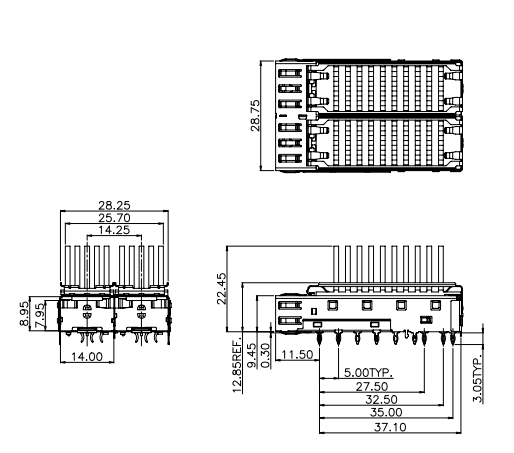
Copper SFPs with RJ45 interfaces are also very common. They provide a simple way to connect fiber-capable switches to existing copper cabling, which is especially useful in brownfield environments. In many networks, 1G SFPs are still widely deployed because they meet the needs of legacy systems and offer an economical upgrade path without requiring major changes to the underlying infrastructure.
SFP+ (10G): The Workhorse for 10G Connectivity
SFP+ takes the familiar SFP form factor into the 10G era and has become a standard option for higher-performance enterprise and data center links. Optical variants such as 10GBASE-SR, LR, ER and ZR support different distances and fiber types, making it straightforward to choose a module that fits a specific link requirement.
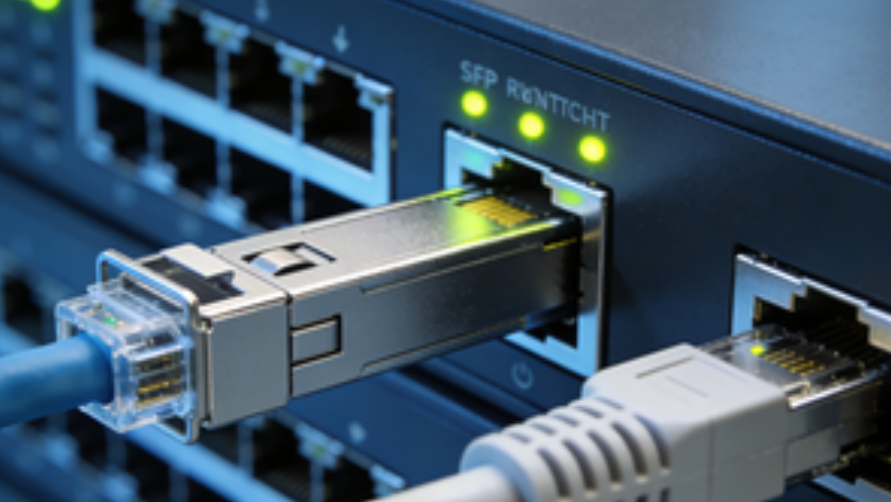
For short connections within a rack or between nearby racks, Direct Attach Copper (DAC) cables are very popular thanks to their low cost, low latency and simple installation. Active Optical Cables (AOC) extend that reach where copper is no longer practical, while still packaging fiber and optics into a single, easy-to-handle cable. Because of this mix of flexibility and maturity, SFP+ has become the default choice for 10G server uplinks, smaller spine–leaf fabrics and many storage deployments.
SFP28 (25G): More Bandwidth in the Same Size
SFP28 keeps the same physical footprint as SFP and SFP+, but boosts the per-lane data rate to 25G. That gives operators a straightforward way to increase bandwidth per port without redesigning panels or changing chassis. Typical optics include 25GBASE-SR and LR, along with BiDi modules that support bidirectional transmission over a single fiber pair to make better use of existing cabling.
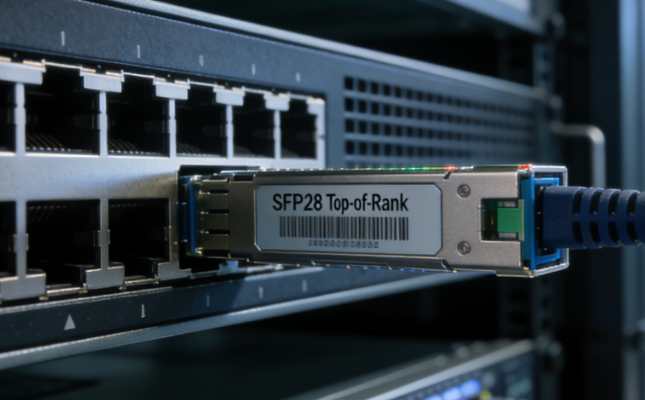
Copper and AOC options are also available, similar to SFP+, which makes SFP28 a practical choice for short-reach and in-rack connectivity. It is widely used at the Top-of-Rack layer in modern data centers, where it delivers a good balance of bandwidth, power efficiency and port density. In many spine–leaf designs, SFP28 is paired with QSFP28 uplinks, creating a clean and scalable path from 25G access to a 100G spine.
QSFP28 (100G): High-Capacity Fabric with Flexible Breakout Options
QSFP28 brings 100G to a single port and has become a core building block in large data center fabrics. Optical variants such as SR4, LR4, ER4 and CWDM4 cover a wide range of distances and cabling models, from short multimode ribbon fiber to longer-reach single-mode links.
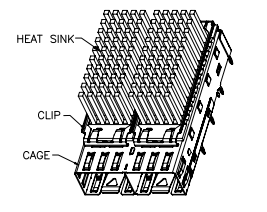
For short switch-to-switch connections, 100G DACs and AOCs help keep both cost and complexity down. One of QSFP28’s biggest advantages is its breakout capability: a single 100G port can be split into four 25G connections with a breakout cable, making it easy to fan out spine ports to multiple leaf or ToR switches without adding new interface types.
QSFP28 supports both parallel optics and wavelength-division multiplexed designs, giving network architects several options to balance reach, fiber usage and cost when planning the physical layer.
Summary
Moving from SFP to QSFP28 is not only a jump in line rate; it also expands the range of optical modules, cable types and breakout options you can use. This progression makes it easier to design networks that scale smoothly—from access and aggregation all the way to high-capacity data center cores—while keeping the overall architecture efficient, flexible and easier to evolve over time.
Read more:
https://www.glgnet.biz/articledetail/what-does-sfp-stand-for.html
https://www.glgnet.biz/articledetail/what-is-sfp-port.html
Conclusion
By understanding how data rate and lanes, form factor and density, and connectivity options evolve across SFP, SFP+ SFP28 and QSFP28, you can design a network that not only meets today’s requirements, but also has a clear and manageable path to higher speeds in the future.